

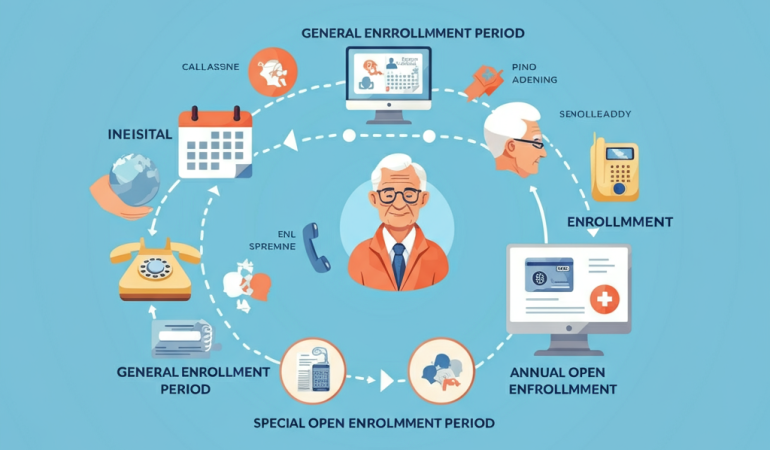

Step-by-Step Guide to Medicare Enrollment
Signing up for Medicare might feel like an overwhelming process, but it doesn’t have to be. Whether you’re new to Medicare or helping someone else, understanding the enrollment process can make all the difference. This guide walks you through eligibility, enrollment periods, and the steps to enroll so you can handle it with confidence.
Who Is Eligible for Medicare?
Medicare is available to certain groups of people. You are eligible if any of the following apply to you:

- You are 65 years or older and a U.S. citizen or legal permanent resident.
- You are younger than 65 but have a qualifying disability and have been receiving Social Security Disability Insurance (SSDI) for at least 24 months.
- You have End-Stage Renal Disease (ESRD) or Amyotrophic Lateral Sclerosis (ALS) regardless of your age.
Knowing your eligibility status is the first step before starting the enrollment process.
Medicare Enrollment Periods
Medicare has specific windows when you can sign up. Missing these periods can lead to delays in coverage or penalties, so mark your calendar! Here are the main enrollment periods to know:
- Initial Enrollment Period (IEP)
Your IEP is a seven-month window that begins three months before the month you turn 65, includes your birthday month, and ends three months after. This is the best time to apply if you’re new to Medicare. - General Enrollment Period (GEP)
If you missed your IEP, you can sign up during the GEP, which runs from January 1 to March 31 each year. However, coverage won’t begin until July 1, and you may face late enrollment penalties. - Special Enrollment Period (SEP)
You may qualify for an SEP if you delayed enrolling in Medicare because you or your spouse were still working and had employer-based health insurance. SEPs allow you to enroll without penalties after that coverage ends. - Annual Open Enrollment Period (AEP)
AEP is from October 15 to December 7 every year and is for making changes to existing Medicare plans, like switching from Original Medicare to Medicare Advantage or changing prescription drug plans.
Steps to Enroll in Medicare
Once you’re eligible and know your enrollment period, follow these steps to get started:
- Determine if You’re Automatically Enrolled
If you’re already receiving Social Security or Railroad Retirement Board benefits when you turn 65, you’ll be automatically enrolled in Medicare Part A and Part B. Look for a Medicare card in the mail about three months before your birthday.
If you’re not collecting benefits, you will need to actively sign up.
- Sign Up During Your Enrollment Period
There are three main ways to enroll in Medicare if you’re not automatically enrolled:
- Online at the Social Security Administration (SSA) website. This is the fastest and easiest way to sign up.
- By phone by calling the SSA at 1-800-772-1213 (or TTY 1-800-325-0778 for hearing impaired).
- In person at your local Social Security office. It’s a good idea to call ahead and make an appointment.
- Decide What Coverage You Need
Original Medicare (Parts A and B) comes with standard benefits, but you might want to add:
- Medicare Part D for prescription drug coverage.
- Medigap for supplemental insurance to cover out-of-pocket costs.
- Medicare Advantage (Part C) if you prefer an all-in-one plan with additional benefits.
Research and compare plans to select what best fits your needs. You can use tools like Medicare’s Plan Finder on their official website.
- Complete the Application
Once you’ve chosen your plan, follow the instructions for applying. You’ll need basic information like your Social Security number, proof of residency, and employment details if you have job-based coverage.
Tips for a Smooth Enrollment
- Enroll Early: If possible, start the process early in your Initial Enrollment Period to avoid delays.
- Check Current Coverage: If you have existing health insurance, confirm how it interacts with Medicare to avoid gaps in coverage.
- Avoid Late Penalties: Don’t miss your deadlines! Signing up on time ensures you avoid penalties, especially for Parts B and D.
- Keep Documentation Handy: Have all necessary documents ready, like an ID, Social Security information, and proof of disability (if applicable).
- Ask for Help: If you’re confused, reach out to your local State Health Insurance Assistance Program (SHIP) for free, personalized help.
Common Mistakes to Avoid
- Assuming You’re Auto-Enrolled: Not everyone gets automatic enrollment. If you don’t receive Social Security benefits yet, you must actively sign up.
- Skipping Part B If You’re Not Working: Delaying Part B can lead to penalties unless you’re covered by current employment health insurance.
- Ignoring Prescription Coverage: Without Part D or other drug coverage, you might face high out-of-pocket costs—plus a late penalty if you enroll later.
- Missing Your SEP Window: If you qualify for a Special Enrollment Period, act promptly to avoid gaps in coverage or unnecessary penalties.
Enrolling in Medicare doesn’t have to be stressful. By knowing your eligibility, understanding the enrollment periods, and following the step-by-step process, you’ll be on your way to getting the healthcare coverage you need. And remember, if you’re unsure, there’s plenty of help available to guide you through.
Take the leap, get covered, and prioritize your health today!